Monday, November 22, 2010

Something to Cry About

I'm an unrepentant, rabid fan of moderation. (I hear it's the slight whooshing sound of the arc right in the middle of a wild swing between opposite poles of the pendulum.) 

I really like the way "Slightly Tearful" manages to be both truly sentimental, slightly embarrassed of that overabundance of passion, and then twists the knife into true emotion at the very end. It's a very fine line to walk.


Slightly Tearful
Mark Halliday

Slightly tearful I get reading Henry King's "Exequy"
in the coffee shop imagining for three seconds what it would be
to outlive my dear Jill

but only slightly briefly tearful because it's a coffee shop after all
and because I do re-realize as usual that the tears would be
largely for me

and the beauty of my devotion
and that in a long blue shadow behind a sweetly hypothetical sorrow
there waits the possibility—

the probability by and by that far more expensive tears will need to be shed
in anyone's life as in mine, so to save for that day seems wise;

accordingly it occurs to me that when I teach the "Exequy"
I'd better not read it aloud in class
because I'd get tearful

even before Henry King exclaims in a sudden parenthesis
that his dead wife was for him a world, his little world;
it's good for the professor to care

but the students sense that when the prof gets weepy
it's not good teaching; a serious frugality of tears
should be our study amid the hasting years.


It's also great advice for aspiring teachers: don't let your subject get the better of you. Contrary to what "Stand and Deliver," "The Emperor's Club," "Mona Lisa Smile" and "Mr. Holland's Opus" will tell you, a grand swelling of the orchestra as your class ovates you doesn't actually make for a meaningful educational experience. 
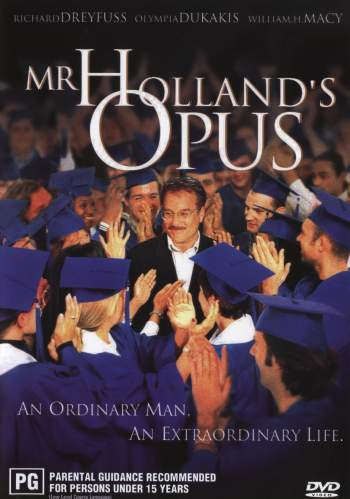

At the end of the day, the job of the teacher isn't to feel deeply. Similar to an actor, the job is to force the issue and make an audience feel deeply. Leave the hankies at home: there are better things to weep over. 

Like my dad says, "You'd better quit crying this minute. Or I'll give you something to cry about."

Poems Are Not Placards

I found this on the Slate Magazine poetry podcast and it knocked my socks off. At first, with all the science imagery and historical allusion, I figured it was an elegy for our modern era. Especially with a title like "The Age," it sounded like an epoch-spanning poem that's got huge universal truths on its mind.

And then you come to the end and realize that it was all a metaphor, that the night and the day, the science and the history are trying to talk about something so immediate and specific. The name of the new leader, the "O O O" that the children chant, it suddenly twists everything into a new focus like a kaleidoscope shook hard.

All in all, it's one of the most inscrutable and subtle political poems I've ever read, if that was indeed the poet's intention. If there was more political writing like this I might not hate protest poetry quite so much.


The Age
Gail Mazur

For what seemed an infinite time there were nights
that were too long. We knew a little science, not enough,

some cosmology. We'd heard of dark matter, we'd been assured
although it's everywhere, it doesn't collide, it will never slam

into our planet, it somehow obeys a gentler law of gravity,
its particles move through each other. We'd begun to understand

it shouldn't frighten us that we were the universe's debris,
or that when we look up at the stars, we're really looking back.

It was hard to like what we knew. We wanted to live
in the present, but it was dark. Ignorance

was one of our consolations. The universe was expanding
at an accelerating rate, we'd been told we were not at its center,

that it had no center. And how look forward with hope,
if not by looking up? I told the others we ought to study

history again, history teaches us more than erasures,
more than diminutions, there'd be something for us there.

I also dared to say we could begin to work at things again,
to make things, that I thought the hours of light would lengthen,

that nature still works that way. We would have a future.
Up to then we'd been observing anniversaries only

of mistakes and catastrophes, the darkness seemed to
blanket, to contain our terrible shame. I don't know

if anyone listened to me, it doesn't matter. Gradually,
afternoons began seeping back. As I'd promised, the children

could walk home from school in the freshening light,
they seemed more playful, singing nonsensical songs

so marvelous catbirds wanted to mimic them. Why say anything,
why tell them the endless nights would return? Listen to them,

the name of a new leader they trust on their lips, O O O they chant,
and I hear like one struggling to wake from a mournful dream.


Back to the Beginning Again

I haven't posted anything of my own in a while, and since I'm STILL playing catch-up on my blog entries here's a quick one to fulfill my contractual obligation. It's not great, but it's different.


Short Definition
Matt Quarterman


Three “of”s, three “the”s
and five simple nouns,
like an arpeggio of desires,
stumble hard upon each other.
I’m tempted by this phrase,
a sweetly beckoning lilt.
Foolish to oppose or resist,
idiocy to deny the force
of twelve short words.


“The fruit of the tree of the knowledge of good and evil.”


Thursday, November 18, 2010

Blind Guide

Signs
Gjertrud Schnackenberg

Threading the palm, a web of little lines
Spells out the lost money, the heart, the head,
The wagging tounges, the sudden deaths, in signs
We would smooth out, like imprints on a bed,


In signs that can't be helped, geese heading south,
In signs read anxiously, like breath that clouds
A mirror held to a barely open mouth,
Like telegrams, the gathering of crowds - 


The plane's X in the sky, spelling disaster;
Before the whistle and hit, a tracer flare;
Before rubble, a hairline crack in plaster
And a housefly's panicked scribbling on the air.


Another one that I don't know what it means. But after yammering on about it for ever and a day on this blog, I realized that John Keats invented a term for it hundreds of years before I got pooped out onto the planet.


The term is "negative capability." It means being comfortable with ambiguity and the unresolved. Wikipedia calls it "intentional open-mindedness" but that smacks a little too much of New Thought jargon to me. 


I see it as an ability to accept that not everything has an answer you will be able to grasp or accept. The Grand Unified Theory, the Theory of Everything, can never explain everything. Don't try to formulate a hypothesis that will cover every contingency: it can't happen. Even the immutable law that not everything can be explained should be relied upon too heavily. 


Some might call that typical postmodernist thinking, a non-threatening relativism that allows Rick Sanchez to be both racist and non-racist at the same time and in the same manner. This will supposedly undo the Principle of Contradiction, destroy the laws of logic and reverse the polarity of the universe to send us spinning into a black hole of irrelevance and fuzzy reasoning. 


Personally, I just call it "humility." I tend to tune out anybody who claims to have the final ultimate answer that will solve everything. If you're so smart, why aren't you God? Or Justin Timberlake? (Because the smartest person in the world would DEFINITELY know the best thing to be is Justin Timberlake.)


Keats didn't elaborate much: like most poets worth their salt, he didn't go into much detail on the ins and outs of his poetical theory and critical literary opinions. Personally, I think if you get your jollies with that kind of thing beyond stating opinions or practical considerations, you've abdicated the role of an artist. You're supposed to be making art, not talking about making art.


But I feel like for poetry to have anything real, anything that lasts, it's got to have more than one way of existing, more than one way to be seen. Otherwise it's all morals in verse. The unknown and unknowable is what I'm looking for, which is very different from the nonsensical and unintelligible. I want a blind guide who can take me by the hand through new dark mazes. Let's get lost.


Parody Is the Most Cutting Form of Flattery

Some might remember the Gwendolyn Brooks poem this comes from - gotta love poets ripping each other off, and tearing out each other's throats.


We Old Dudes
Joan Murray

We old dudes. We
White shoes. We


Golf ball. We
Eat mall. We


Soak teeth. We
Palm Beach; We


Vote red. We
Soon dead.


Sunday, November 14, 2010

Dude at Thirty

Depressing thoughts of mortality make me happy. Good thing I'm not one of THOSE guys: I'll never be forty!


Men at Forty
Donald Justice


Men at forty
Learn to close softly
The doors to rooms they will not be
Coming back to.


At rest on a stair landing,
They feel it moving
Beneath them now like the deck of a ship,
Though the swell is gentle.


And deep in mirrors
They rediscover
The face of the boy as he practices tying
His father’s tie there in secret,


And the face of that father,
Still warm with the mystery of lather.
They are more fathers than sons themselves now.
Something is filling them, something


That is like the twilight sound
Of the crickets, immense,
Filling the woods at the foot of the slope
Behind their mortgaged houses.


The Study of the Study of the Bible


I have a fair number of friends in seminary, entering or already exited from seminary. I love that kind of person or rather - those kinds of people, since they're a varied and heterogeneous bunch. (Some kinda heterodox, too, but you didn't hear that from me.)


But with all of them there's a common thread of scholarship and respect for the good things intense, devoted study brings. Personally I don't have the patience or language skills for Greek, Hebrew and Aramaic verb tenses, not to mention I'm already tired of hearing the name "Paul Tillich" and I've never read any of his books! Still and all, I envy those who exegete - bringing meaning out of texts with skill and confidence, slow and tentative though that endeavor might be.


I think they'll appreciate this poem: it's the kind of inventive, quick, unusual thinking I've come to expect from biblical scholars. A quick concordance search didn't turn up which verse this poem references, though. Any ideas?


The Gospel of the Gospel
Michael Chitwood

And the prophet said: "Let not your heart
dwell in sadness, but be glad in the day."
The word used for heart has two translations:
One is as a door through which a blue sky
over white-washed stone steps can be glimpsed
and the other has to do with a kind of clearing
in a forest of hemlock and white pine.
Sadness references the turning-inward look
of a shy child in a roomful of strangers.
Glad has a connotation of the same weight
and earthiness of certain flower bulbs
that can lie dormant or be transported
great distances in their dry drowse
and then brought to blossom when replanted.
The phrase "in the day" is a guess, but a good guess,
given that time passed then as now.